
 English
 عربى
عربى
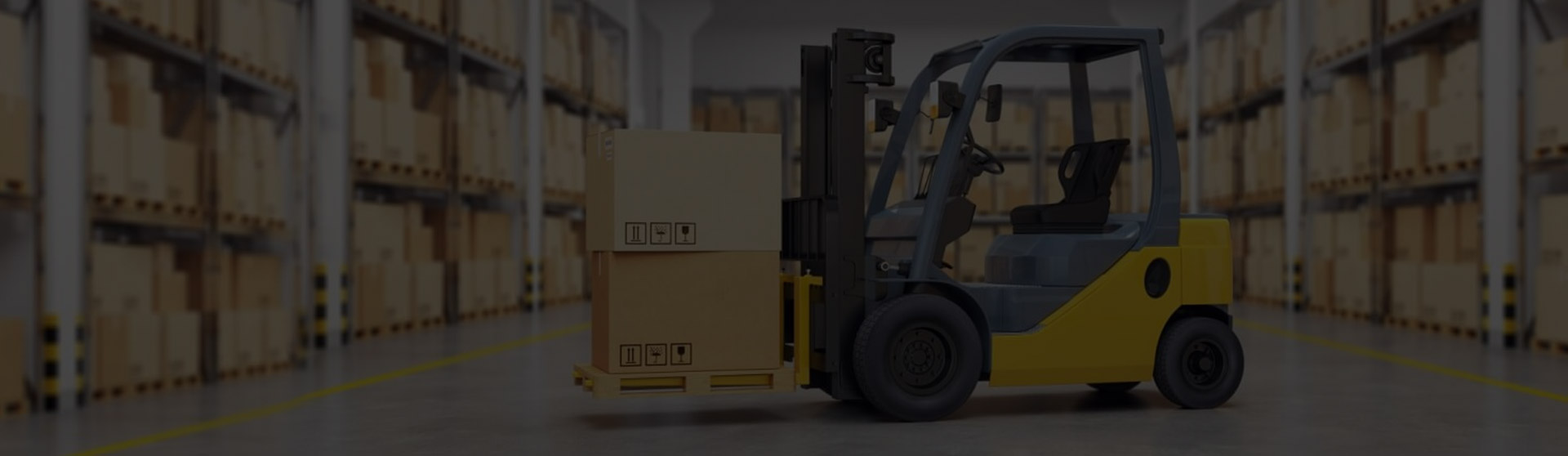

A forklift that cannot stop reliably is a hazard no amount of operator training can fully offset. In warehouses, loading docks, and production plants, most serious forklift incidents trace back to one of two root causes: an untrained or distracted operator, or a machine component that was checked too late, too rarely, or never at all. The second cause is the one that a disciplined maintenance routine can eliminate almost completely — and it starts with the brake system.
Content
- 1 Why Forklift Safety Comes Down to Prevention
- 2 The Pre-Shift Inspection Checklist That Prevents Real Failures
- 3 Brake System Safety: The Component That Must Never Be “Good Enough”
- 4 The Operating Rules That Keep Operators and Pedestrians Safe
- 5 Pedestrian Safety and Site Conditions: The Environment Around the Truck
- 6 Replacing Worn Brake and Wheel Components: Fit Decides Outcome
Why Forklift Safety Comes Down to Prevention
Forklift incidents kill roughly 85 to 100 workers and injure tens of thousands more every year in the United States alone. That figure, consistently cited by safety regulators, does not include the quieter costs: damaged goods, bent racks, ruined floors, and days of lost productivity. On a typical counterbalance truck, the load can weigh several times more than the truck itself, so a collision at walking speed still delivers enormous impact force.
Prevention beats response. Every effective safety program controls three variables: operator training, equipment condition, and worksite layout. All three are measurable, and all three can be improved without a large budget. The cheapest starting point is the pre-shift inspection, because it catches small faults before they become emergency failures.
The Pre-Shift Inspection Checklist That Prevents Real Failures
A five-minute walk-around before the first lift of the day is the single most effective routine in forklift safety. It does not need to be complicated. Focus on the items that directly decide whether the truck can stop, steer, and hold a load.
| Check Point | What to Look For | Why It Matters |
|---|---|---|
| Brake pedal and parking brake | Excessive travel, weak hold on an incline, scraping noise | Stopping distance is the first defense against collisions |
| Tires and steel rims | Cuts, bulges, missing lug nuts, bent rims | Stability and load retention depend on intact wheels |
| Steering and linkage | Free play, stiff movement, unusual noise | Control in narrow aisles requires immediate response |
| Horn, lights, and mirrors | Operational and clearly audible or visible | Pedestrian warnings and blind-spot visibility depend on them |
| Forks and mast chains | Cracks, bends, worn fork heels, chain slack | A dropped load is a direct crush and spill hazard |
If any of these checks fail, the truck should be tagged out of service immediately. A minor brake complaint found at 8 a.m. costs minutes; the same complaint found after a collision costs days and possibly lives.
Brake System Safety: The Component That Must Never Be “Good Enough”
Forklift brakes work differently from car brakes, and that difference explains why they fail in predictable ways. A counterbalance truck spends its day alternating between acceleration, lifting, and abrupt stops in confined spaces. The brake shoes and drums on a 3-ton warehouse forklift absorb far more thermal stress per working hour than passenger vehicle brakes do, especially in operations with high shift turnover.
Wear appears first as longer pedal travel, then a soft or sinking pedal, and finally metal-to-metal contact that scores the drum. When inspection reveals worn linings, scored drums, or leaking wheel cylinders, the correct fix is to replace the worn components as a set. On many popular models, this means fitting a complete brake assembly for a Heli 3-ton forklift rather than mixing old hardware with new linings. Matched components restore even clamping force on both sides of the axle, which is what keeps the truck stopping in a straight line.
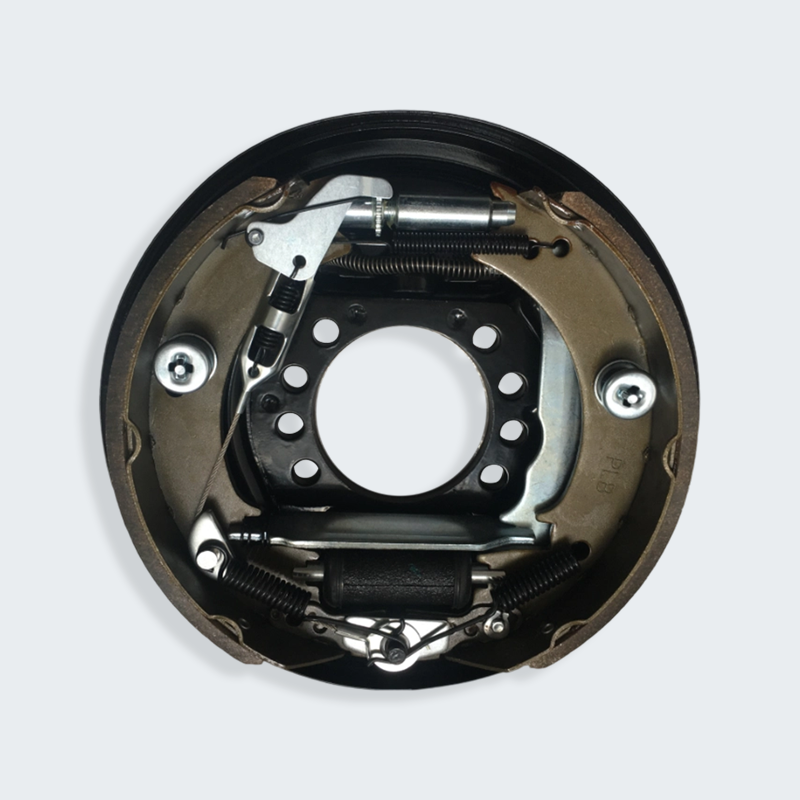 Heli forklift 3 ton left brake assembly Suppliers, Company - Zhuji Prebo Brake SZhuji Prebo Brake System Technology Co., Ltd is China Heli forklift 3 ton left brake assembly suppliers and company, The 3-ton left brake...View Product →
Tonnage and brake configuration matter as much as brand. A 1.5-ton electric forklift uses a lighter hydraulic setup than a 10-ton diesel unit, and some trucks use a single-pump system while others use double-pump or human braking layouts. Fitting the wrong variant can leave the brakes over-assisted or under-powered. For a closer look at how these systems operate, our guide to forklift brake functions, principles, and maintenance explains the practical differences.
The Operating Rules That Keep Operators and Pedestrians Safe
Equipment condition is only half of the equation. The other half is how the truck is driven. The ten rules below are not a complete training program, but they cover the behaviors that appear again and again in incident reports.
- Only trained and certified operators may touch the controls.
- Perform the pre-shift inspection before the first trip of every shift.
- Wear the seat belt, a hard hat, high-visibility vest, and safety shoes.
- Keep the forks low, the mast tilted back, and the load against the carriage while traveling.
- Slow down at corners, doorways, ramps, and pedestrian crossings, and sound the horn.
- Never carry passengers or allow anyone to walk under raised forks.
- Keep the load within the rated capacity on the nameplate and check the load’s center of gravity.
- Travel with the load facing downhill on a slope so the load does not slide off the forks.
- Avoid abrupt stops, sharp turns, and sudden load shifts; they are the main cause of tip-overs.
- Park in designated areas with the forks flat on the floor, the parking brake engaged, and the key removed.
Rule 10 is the one most often skipped at shift change, and it is also the one most likely to cause a runaway truck on even a slight incline. A parking brake that will not hold a loaded truck should be reported and repaired before the end of the shift that found it.
Pedestrian Safety and Site Conditions: The Environment Around the Truck
Even a perfectly maintained forklift becomes dangerous when the worksite does not cooperate. Blind intersections, wet floors, narrow rack aisles, and clutter convert normal driving into near-miss events. The most effective site improvements are structural, not behavioral:
- Install convex mirrors and warning lights at blind corners, and mark pedestrian walkways with floor paint.
- Keep aisle widths at or above the manufacturer’s recommendation for the truck model.
- Repair damaged concrete, loose floor tiles, and torn dock plates; uneven surfaces cause load shifts.
- Enforce separate doors and time windows for forklift and pedestrian traffic in busy loading areas.
- Clean up spills, shrink wrap, and loose pallet pieces immediately; they are tire grip hazards.
Pedestrians face the highest risk when they are behind a reversing forklift. If the reverse alarm or backup lights do not work, treat it as a maintenance defect with the same priority as a failed service brake.
Replacing Worn Brake and Wheel Components: Fit Decides Outcome
When the time comes to replace worn parts, the safest choice is the part that matches the original specification exactly. Forklift brakes and rims are not universal. The same 3-ton class can use different bolting patterns, drum diameters, and left- and right-hand assemblies depending on brand and model year. Ordering by the forklift’s nameplate data and the part number stamped on the old component removes the guesswork.
Brake Shoes: The First Friction Component to Fail
Brake shoes are the most frequently replaced friction component. Once the lining wears below the service limit or the rivets touch the drum, the shoe has no reserve left. Replacing them with correctly matched brake shoes for a Hangcha, Heli, Liugong, or Lonking 3-ton forklift restores braking power and protects the drum from scoring.
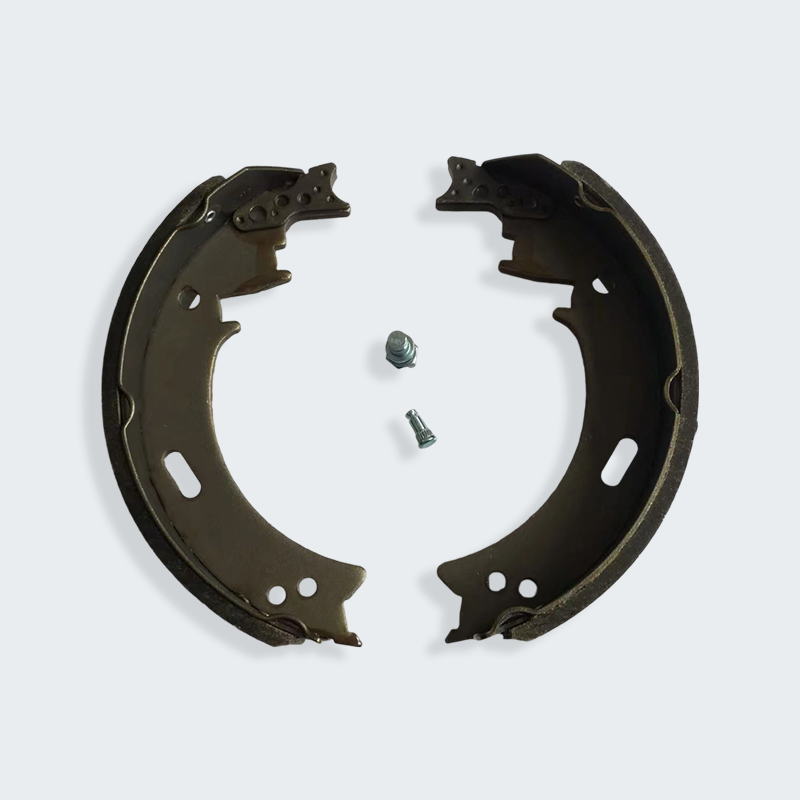 Hangcha/Heli/LiuGong/Lonking forklift 3 ton brake shoe Suppliers, Company - ZhujZhuji Prebo Brake System Technology Co., Ltd is China Hangcha/Heli/LiuGong/Lonking forklift 3 ton brake shoe suppliers and company, This ...View Product →
Wheel Cylinders: Where Leaks Begin
Wheel cylinders are the next component in line. A leaking cylinder contaminates the friction surface and causes uneven braking that pulls the truck to one side. The repair is straightforward, but only if the cylinder matches the truck’s hydraulic configuration. For example, a brake cylinder for a Hangcha R30 or Heli 3-ton model must match the original bore size and port layout, otherwise pedal feel and clamping force will be wrong.
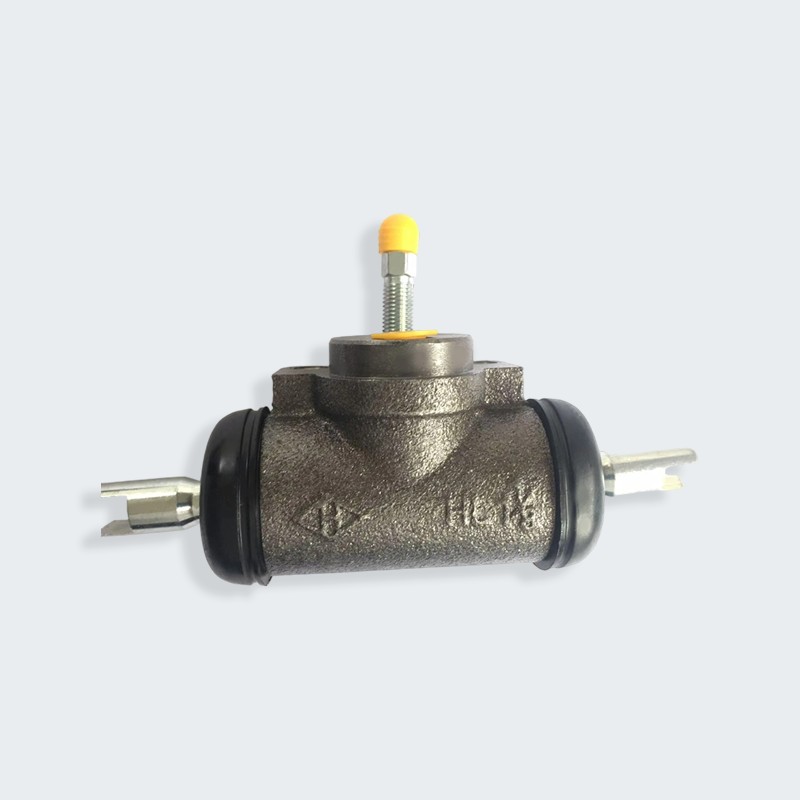 Hangcha forklift R30 Heli forklift 3 ton brake cylinder Suppliers, Company - ZhuZhuji Prebo Brake System Technology Co., Ltd is China Hangcha forklift R30 Heli forklift 3 ton brake cylinder suppliers and company, As t...View Product →
Repair Kits: Complete the Job in One Pass
A complete brake repair kit is the most economical way to service a brake system in one pass. Kits for 1.5-ton, 3-ton, and 4.5-ton models include the springs, seals, and hardware that are easy to forget when ordering parts individually. Replacing the full set at the same time prevents a follow-up repair a few months later.
Forklift safety is not one big change; it is a chain of small, repeatable decisions — inspecting before every shift, replacing worn brake parts before they fail, and keeping the environment predictable for operators and pedestrians. The truck that protects your team tomorrow is the one that was checked today. When you need parts that match the original specification, our team can help confirm the correct brake assembly, brake shoe, cylinder, or steel rim for your truck model; send the nameplate details through the contact page and we will verify the fit before shipping.
