
 English
 عربى
عربى


An operator finishes an online course on a Friday and prints a completion card that shows no expiration date. Thirty months later, a customer's site auditor asks to see that operator's most recent performance evaluation, and the file ends at that Friday. The card said it never expires; the regulation disagrees, and that gap is exactly where forklift certification expiration problems begin.
Here is the direct answer first: a forklift certification lapses after three years at the most. OSHA standard 29 CFR 1910.178(l) requires every powered industrial truck operator to receive a performance evaluation at least once every three years, and sooner when certain events occur. The sections below cover what the rule actually demands, which events end a certification early, what an expired file costs, and how fleet managers keep every operator current.
Content
- 1 Do Forklift Certifications Expire? The Rule Behind the Answer
- 2 What the Three-Year Forklift Certification Cycle Requires
- 3 What Ends a Forklift Certification Early: The Five Refresher Triggers
- 4 The Cost of Letting Forklift Certification Expire
- 5 How to Track Forklift Recertification So Nobody Lapses
- 6 What Recertification Costs and Who Pays for It
- 7 Certified Operator, Safe Truck: Why Brakes Decide the Evaluation
- 8 Audit Paperwork and Pedals on the Same Schedule
- 9 The Bottom Line on Forklift Certification Expiration
Do Forklift Certifications Expire? The Rule Behind the Answer
Yes, they do, with one clarification that trips up many people. A course card can honestly state that it carries no expiry date, and the certification behind it can still go stale. OSHA does not certify operators or issue licenses; it requires the employer to train, evaluate, and re-evaluate. What ages out is the evaluation: once three years pass without a documented re-evaluation, the operator no longer satisfies 1910.178(l), whatever the card in their wallet says.
That is why many online certificates print no expiration date at all. The vendor sells instruction, and instruction does not age; the obligation that ages belongs to the employer. Treat the card as a receipt rather than a license, and the compliance picture becomes much simpler.
What the Three-Year Forklift Certification Cycle Requires
A compliant certification is never a single exam. OSHA divides the requirement into three parts: formal instruction, which can be classroom or online; practical training on the truck type the operator will actually run; and a performance evaluation in the real workplace. All three must be complete before anyone operates unsupervised, and the evaluation must be repeated at least once every three years.
The four details every certification record must contain
| Record field | What it must show | Why it matters |
|---|---|---|
| Operator name | Full name of the trained and evaluated operator | Ties the record to a person, not a crew or shift |
| Date of training | When formal and practical instruction took place | Proves instruction happened before operation began |
| Date of evaluation | When the performance evaluation was completed | Starts the three-year clock toward the next renewal |
| Evaluator identity | Name of the person(s) performing training or evaluation | Shows a qualified, accountable person signed off |
Keep those records for as long as the operator drives for you. When an auditor, an insurance carrier, or a contractor-qualification team asks for proof, the evaluation date is the first thing they check, and it is the date that quietly turns a current operator into a compliance gap.
What Ends a Forklift Certification Early: The Five Refresher Triggers
The three-year cycle is a maximum, not a schedule to lean on. Under the refresher provisions of 1910.178(l), any of the following events sends an operator back for training and a new evaluation before returning to the truck:
- Unsafe operation is observed. Speeding, elevated travel, or unsecured loads all count.
- An accident or a near-miss occurs. No injury is required; the event triggers refresher training in the relevant topics.
- An evaluation uncovers unsafe operation. Routine observation counts, and the finding starts the clock immediately.
- The operator is assigned to a different truck type. Moving from a 3-ton cushion unit to an 8-10 ton double-pump truck is a new qualification task, not a personnel-file note.
- Workplace conditions change. A new racking layout, a revised traffic pattern, or a different floor surface all qualify.
Item four catches the most fleets. Certification is specific to a truck class and a workplace, and truck-type changes arrive quietly as scheduling decisions, which makes them the easiest trigger to miss.
The Cost of Letting Forklift Certification Expire
An expired evaluation is not a paperwork footnote. Once the three years lapse, the operator has no valid evaluation on record, which means the employer is effectively fielding an untrained operator on a machine that can weigh several tons fully loaded.
- OSHA citations. Powered industrial trucks consistently rank among the agency's most frequently cited standards; serious violations run to five figures per instance, and willful or repeated findings climb into six figures.
- Stopped work. A lapsed operator comes off the truck until re-evaluated, an immediate capacity hit in a peak season.
- Liability exposure. After an incident, a stale evaluation file is among the first documents requested in a claim.
- Contract and insurance friction. Rental houses, site managers, and insurer audits increasingly ask for evaluation dates, not just course cards.
One lapsed file can therefore cost more than several years of training budgets, and every dollar of it was avoidable with a calendar reminder.
How to Track Forklift Recertification So Nobody Lapses
Fleets that never miss a date treat recertification as an operations process rather than an HR errand. A workable loop looks like this:
- Build a live training matrix. One row per operator, one column per truck class, with the evaluation date in each cell.
- Set reminders at 90, 60, and 30 days. The 90-day alert reserves the evaluator and the truck; the 30-day alert is the last call.
- Assign a qualified evaluator. The person conducting the evaluation needs the knowledge, training, and experience to judge competence, whether a senior operator, a supervisor, or an outside trainer.
- Evaluate on the truck and in the conditions actually used. The performance check has to reflect the operator's real workplace and the truck class they run.
- Document the same day. Update the record with the operator's name, the evaluation date, and the evaluator's identity before the shift ends.
One warning belongs here: online courses can deliver the formal-instruction portion, but the three-year evaluation must be a real-world performance check by a qualified person. An online certificate on its own renews nobody.
What Recertification Costs and Who Pays for It
The formal part of renewal is inexpensive; the coordination is what costs time. Typical market ranges look like this:
| Renewal format | Typical cost | Where it fits best |
|---|---|---|
| Online refresher course | About $50 to $150 per operator | Covering the formal-instruction portion for crews on rotating shifts |
| On-site group training | Roughly $500 to $1,500 per session | Fleets of five or more operators needing hands-on evaluation together |
| Third-party evaluator | About $100 to $250 per operator | Small teams or mixed-brand fleets without an in-house evaluator |
Whoever writes the check, the obligation sits with the employer; OSHA's training guidance makes clear that required safety instruction is not a fee to pass on to employees. Fleets with good records usually find the cheapest route is an in-house evaluator backed by an outside course for the formal portion.
Certified Operator, Safe Truck: Why Brakes Decide the Evaluation
A performance evaluation happens on a real truck in a real yard, which makes renewal week a natural checkpoint for the machine itself. Evaluators routinely cut a session short because the truck was in no condition to be judged: a spongy brake pedal, a weeping wheel cylinder, or uneven braking that pulls the truck to one side under load. A certified operator on worn brakes is still a hazard, and paperwork cannot fix that.
That is why shops running 1.5 to 10 ton trucks from Hangcha, Heli, Toyota, Komatsu, and similar fleets schedule brake inspection a few weeks before renewal dates, replacing worn shoes, cylinders, or complete brake assemblies while the truck is already out of rotation. Matching parts to the exact model and tonnage matters, because brake components are not universal across brands or axle types:
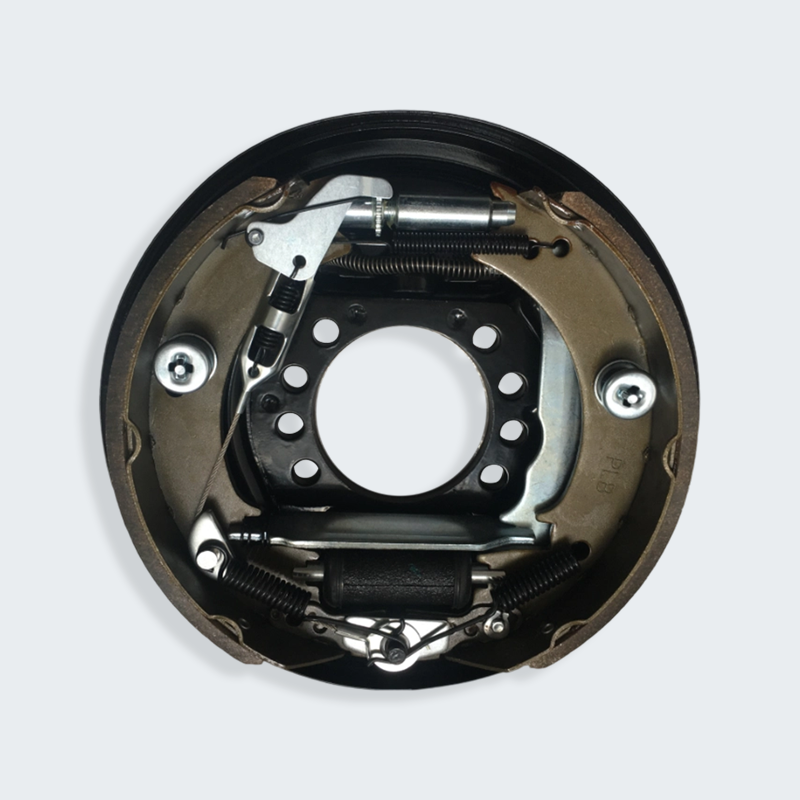 Heli 3-Ton Left Forklift Brake AssemblyA model-specific left-side brake assembly for Heli 3-ton trucks. With shops replacing brake components before renewal dates to avoid downtime, this exact-fit part suits trucks already out of rotation.View Product →
Brake shoes sit at the top of the wear list because friction material thins with every stop, while glazing and contamination build up gradually in dusty yards. Most failure patterns give early warnings that a structured inspection can catch in time; our guide to the causes of forklift brake failure and how to troubleshoot them covers those patterns in detail:
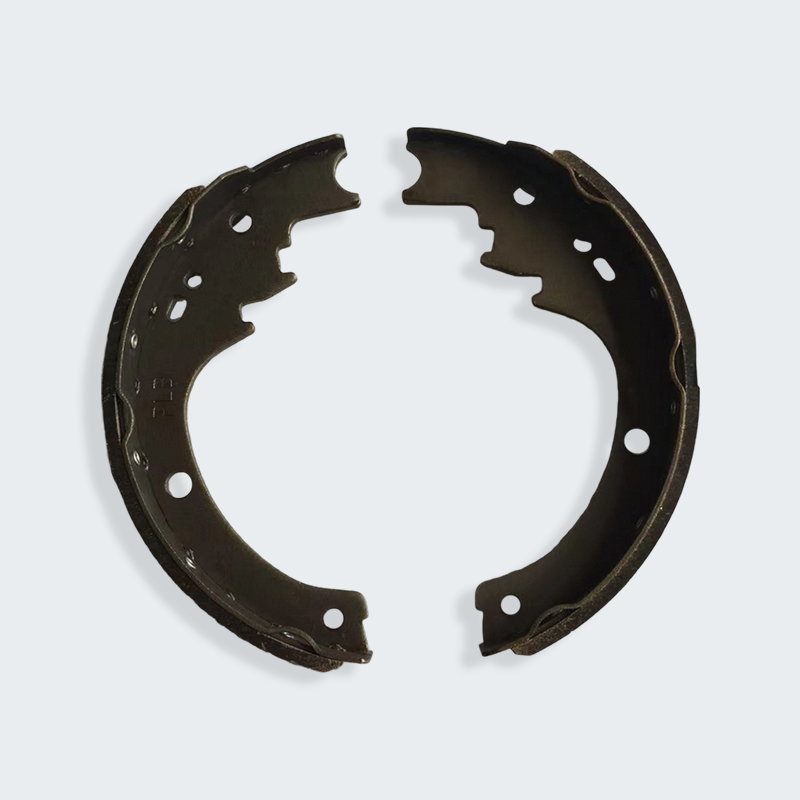 Hangcha, Heli, Toyota 2-Ton Forklift Brake ShoeA 2-ton brake shoe compatible with Hangcha, Heli, and Toyota fleets. Brake shoes wear fastest, so fitting a matched replacement during scheduled inspection keeps small-tonnage trucks braking reliably.View Product →
Audit Paperwork and Pedals on the Same Schedule
The most efficient fleets pair the compliance audit with a parts audit: while one person verifies evaluation dates, the maintenance lead walks the row of trucks and checks pedal travel, cylinder leaks, hose condition, and shoe thickness. Anything borderline gets a repair kit or replacement ordered that week rather than after it fails; to keep part numbers right, send the truck model, tonnage, and mounting side, and matching components can be confirmed before the truck leaves rotation:
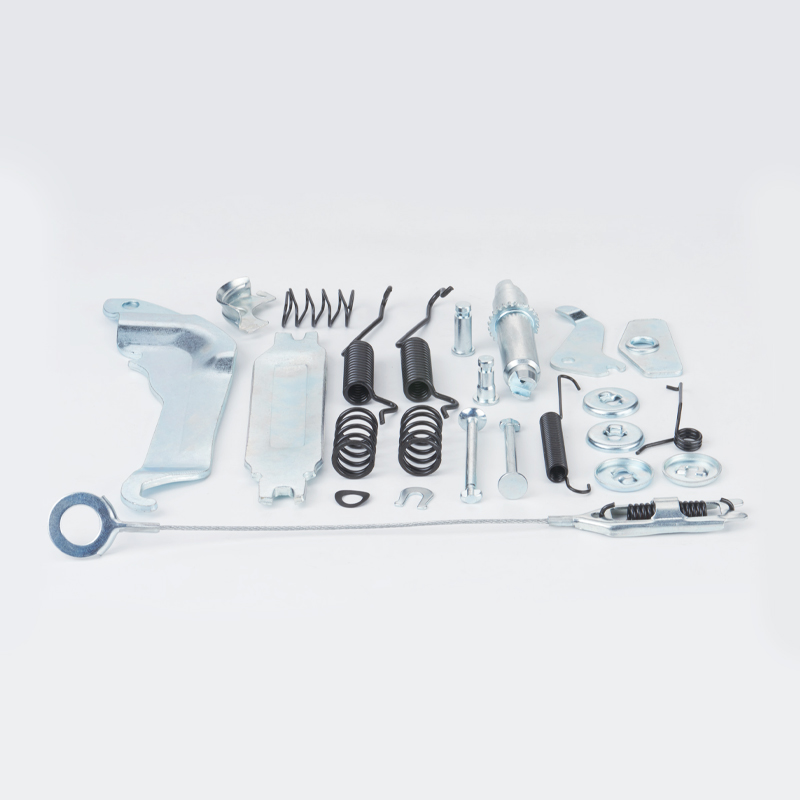 Hangzhou/Heli 3-Ton Forklift Brake Repair KitA repair kit for 3-ton Hangzhou and Heli trucks, replacing worn components and seals to restore hydraulic braking. Ideal when quarterly parts audits flag borderline pedal travel or cylinder leaks.View Product →
Run that paired audit once a quarter and renewal week stops being an emergency. The paperwork is current, the trucks are ready to be judged, and operators walk into the evaluation on machines that can actually pass.
The Bottom Line on Forklift Certification Expiration
Forklift certification expires three years after the last evaluation at the latest, and sooner after an unsafe observation, an accident or near-miss, a failed evaluation, a truck-type change, or a workplace change. Track the evaluation date rather than the card, start scheduling at the 90-day mark, and use each renewal as a checkpoint for the truck's brakes and wear parts as well. Operators, paperwork, and machines all have to pass together, because in an audit or an incident, only the weakest of the three counts.
