
 English
 عربى
عربى
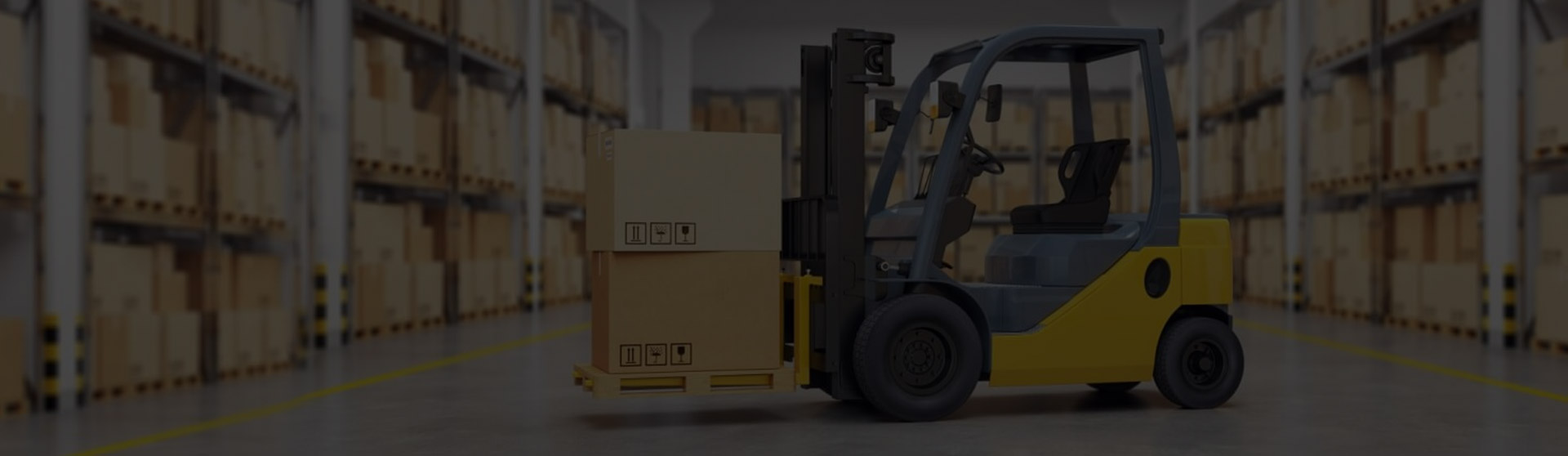

A 3-tonne counterbalance forklift travelling at walking pace needs roughly 4 to 5 metres to come to a full stop on dry concrete. Add a damp floor, a raised load, or a brake shoe worn close to its backing plate, and that distance stretches past 8 metres. Most aisles are about 3 metres wide. That shortfall, rather than carelessness alone, is where a large share of warehouse incidents begins.
The conclusion first: the forklift safety devices that prevent the most damage are the least exciting ones, namely service brakes, seat belts, horns and reversing alarms. Blue spot lamps, cameras and telematics are worth their cost, but they only warn. A brake assembly is what physically stops 2 to 10 tonnes of truck and load, and it is the one device on the list that wears a little with every pedal press.
The rest of this page explains what each device does, how the layers fit together, how to match braking and wheel-end parts to a mixed fleet, and where buyers usually lose money on look-alike substitutes.
Content
- 1 Three Layers of Forklift Safety Devices
- 2 What Each Device Does and What It Prevents
- 3 Brake Assemblies: Match Tonnage, Brand and Pump Type
- 4 Wear Parts Decide Whether Those Devices Still Work
- 5 Rims and Wheels: The Stability Devices Nobody Calls Safety Devices
- 6 Warning Devices: Small Money, Large Visibility Gains
- 7 Proximity Detection, Cameras and Fleet Monitoring
- 8 A Practical Checklist Before You Order Safety Parts
Three Layers of Forklift Safety Devices
Fleets that buy safety equipment in the wrong order pay twice, because a warning device cannot compensate for a stopping system that is already tired. The workable sequence is primary, secondary and tertiary.
- Primary, stopping: service brake assemblies, brake shoes, brake cylinders, hand or parking brakes and the hydraulic circuit that feeds them.
- Secondary, protecting the operator when stopping fails: overhead guard, seat belt with seat switch, load backrest, mast and hydraulic locks.
- Tertiary, helping people notice each other: blue spot lights, amber beacons, LED work lights, horns, reversing alarms, mirrors, proximity sensors and cameras.
An AI camera will not shorten a stopping distance by a single centimetre. What it does is reduce the chance of two trucks meeting in an intersection at all, which is why it belongs on top of a healthy brake system rather than in place of one. When a budget only stretches to one upgrade this quarter, spend it on the parts that stop the truck.
What Each Device Does and What It Prevents
The table below is the short version of a maintenance plan: device, function, the way it usually fails, and the detail that has to be confirmed before a replacement is ordered.
| Device | What it does | Common failure mode | Confirm before ordering |
|---|---|---|---|
| Service brake assembly | Converts pedal force into stopping force at the wheel | Long pedal travel, uneven pull, fluid weeping | Brand, tonnage, left or right position |
| Brake shoe and lining | Friction surface inside the drum | Glazing, cracking, lining worn to the rivets | Lining compound and shoe width |
| Brake cylinder | Turns hydraulic pressure into shoe movement | Seal seepage or a seized piston | Single pump or double pump circuit |
| Seat belt with seat switch | Keeps the operator inside the guard and can block travel when unbuckled | Belt not latching, switch bypassed | Mounting bolt pattern |
| Overhead guard | Deflects falling objects | Cracked welds after an impact | Inspect after impact, not a routine wear item |
| Horn and reversing alarm | Audible warning to people nearby | Corroded contacts, alarm lost in yard noise | Voltage and sound level |
| Blue spot or arc light | Projects a warning line on the floor ahead or behind | Dust on the lens, water ingress | IP-rated housing for wash-down areas |
| Proximity detection and cameras | Warns the driver about pedestrians or racking | Blind spots, alerts ignored | Treat as a supplement, never a brake substitute |
Brake Assemblies: Match Tonnage, Brand and Pump Type
Brake parts are not indexed by size alone. They are indexed by brand, tonnage, axle position and pump arrangement, and two trucks of the same nominal capacity can use hardware that will not interchange.
On the Hangcha side alone, a 3-tonne truck may need an X30, an R30 or an XIPD350 assembly depending on the series, and each of those exists in a left and a right version. Heli covers 1.5, 2, 3, 4.5, 5, 5 to 7 and 8 to 10 tonne models, with K38 and K45 series units sitting alongside them. Toyota 7F 2-tonne and 8F 2 to 3 tonne trucks, Komatsu, Tailift and the electric Liugong 1.5-tonne range each have their own fitments.
Three details decide whether the part in the box is the part on the bench: single or double pump, drum hand brake or foot brake, and hole pattern. Tailift 3-tonne assemblies, for example, are supplied in big-hole and small-hole versions, and widened cylinders and shoes appear on 4 to 5 tonne axles where the drum is broader.
If a truck is already pulling to one side or the pedal is sinking, work through forklift brake failure causes and troubleshooting methods before ordering anything, so the replacement fixes the cause rather than the symptom.
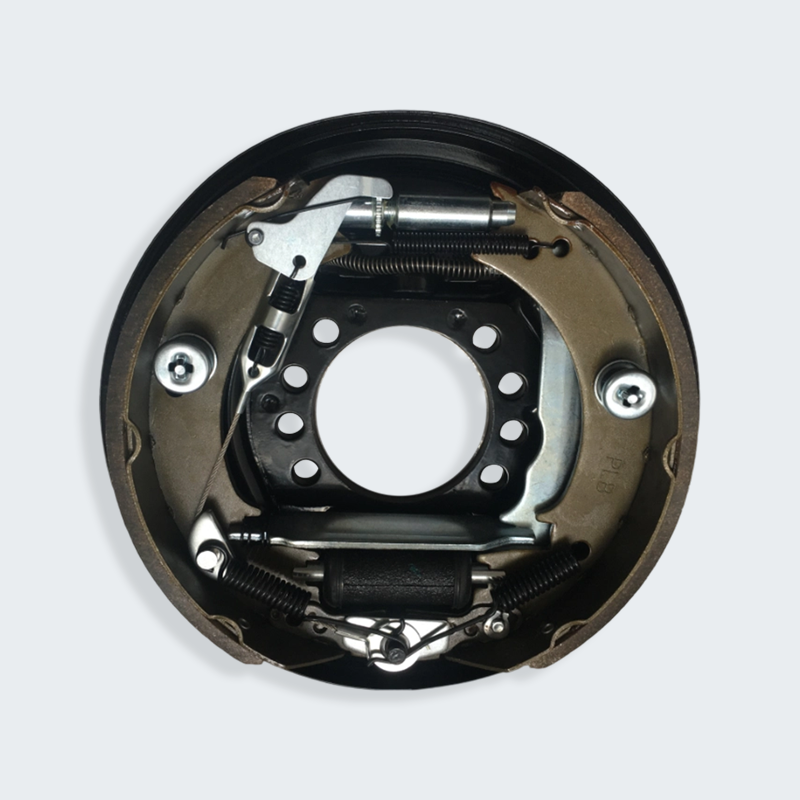 Heli forklift 3 ton left brake assemblyThe 3-ton left brake assembly of the Heli forklift plays a vital role in the field of industrial handling. The assembly is precisely designed, with stable and reliable...View Product →
Wear Parts Decide Whether Those Devices Still Work
A safety device is only as good as its wear items. Lining thickness, drum condition and cylinder seals set the real stopping performance of a truck, and none of that shows up in a specification sheet once the machine has been in service for a few thousand hours.
What a Walkaround Should Catch
- Pedal free play drifting beyond the maker's limit, or a pedal that feels spongy rather than firm.
- The truck pulling to one side under braking, which usually points to one wheel doing less work than the other.
- Fluid weeping around a wheel cylinder or a damp backing plate.
- Lining material close to the rivets, glazed or cracked, and scored drums that will shorten the life of any new shoe.
- A parking brake that will not hold the truck on a ramp with the rated load.
Repair kits are the practical answer for the second half of the job, because springs, seals, clips and boots are usually found missing halfway through a rebuild. Shoes for Hangcha, Heli, Liugong and Lonking 3-tonne trucks share a common footprint, which keeps a mixed fleet to fewer part numbers on the shelf.
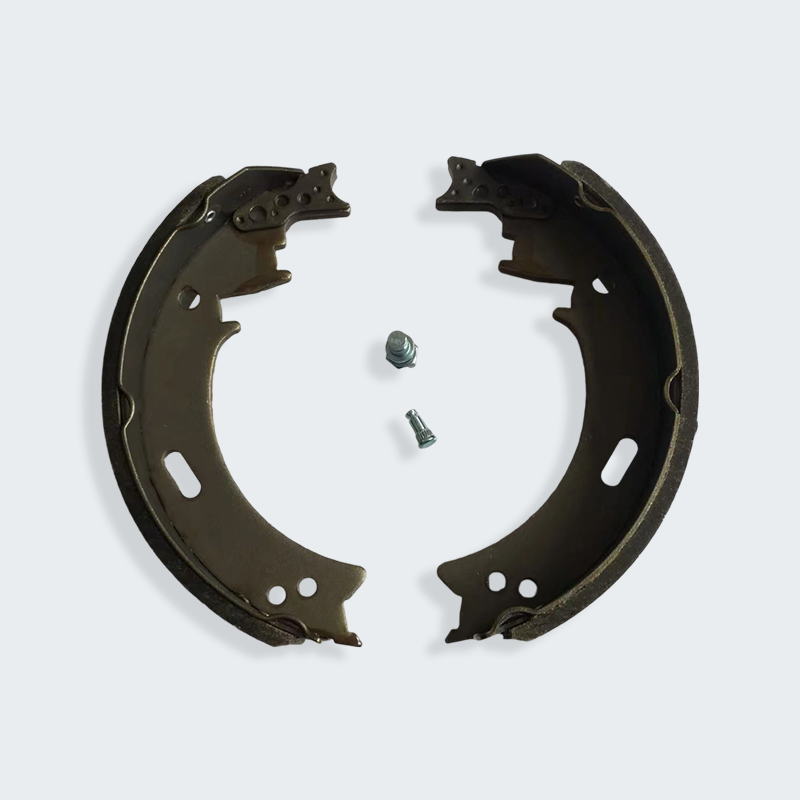 Hangcha/Heli/LiuGong/Lonking forklift 3 ton brake shoeThis brake shoe is a key brake component designed for common 3-ton internal combustion or electric forklifts under Hangcha, Heli, LiuGong, and Lonking. As the core fri...View Product →
Rims and Wheels: The Stability Devices Nobody Calls Safety Devices
A cracked rim or a run of loose wheel nuts finishes the same way as a failed brake, with a load on its side. Wheel-end hardware deserves the same attention as the stopping system, particularly on trucks that work rough yards and ramps.
Split rims and one-piece rims are not interchangeable on the same hub, and solid tyre rims follow their own size logic. Common fitments run from 5.00-8 and 6.00-9 on smaller trucks, through 6.50-10 and 7.00-12, up to 8.25-15, 21x8.9 and 28x9.15 on the heavier axles. Dual wheel solid rims appear where a 4.5 tonne or larger truck carries its load on twin wheels, and one-piece solid rims are used on the 8.25-15 front and rear positions of 5-tonne machines.
Because the same size can sit behind three different hub designs, the reliable way to order is by truck brand and series, then rim size, then split or one-piece construction.
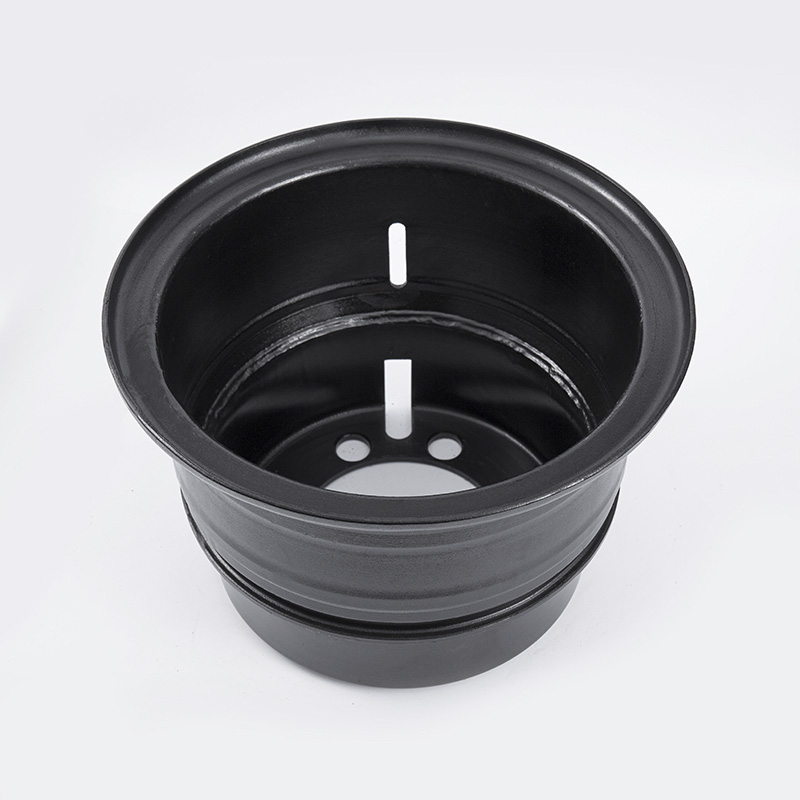 Hangzhou forklift 45R dual wheel solid steel rim 825-15The Hangzhou forklift 45R Dual Wheel Solid Steel Rim 825-15 is a robust solution for industrial vehicles requiring exceptional durability and load capacity. This solid...View Product →
Warning Devices: Small Money, Large Visibility Gains
Blue spot and arc lights are the cheapest real improvement most fleets can make. A lamp that projects a line on the floor several metres ahead or behind the truck gives pedestrians a moving warning that a flashing beacon on the overhead guard never delivers, especially in a noisy yard where the horn and the reversing alarm have to compete with engines and impact wrenches.
Low-height LED beacons help in racking aisles where a lamp mounted high on the guard is hidden by beams. A full LED light package covering headlights, brake lights and direction indicators matters for trucks that share yards with road vehicles. Panoramic rear-view mirrors cut the blind spot behind a loaded mast.
The two specification traps are environmental and electrical. A lamp with no meaningful IP rating fails within months in a wash-down or cold-store area, and a 12 volt unit on a 24 or 48 volt truck fails immediately. Alarm sound level should be chosen against the noise floor of the site, not picked from a catalogue because it is the cheapest option.
Proximity Detection, Cameras and Fleet Monitoring
Tag-based proximity systems, ultrasonic sensors and AI cameras address the one risk that brakes cannot: two vehicles or a vehicle and a pedestrian approaching each other without either party noticing. Telematics adds a record, logging impacts, monitoring seat belt use, limiting speed in defined aisles and restricting operation to trained, authorised drivers.
The practical constraints are power, mounting, calibration and attention. A detection system fitted without a clear alarm policy becomes background noise within a fortnight, and dashboards that nobody reviews change no behaviour. In a US workplace, OSHA's powered industrial truck standard expects an operator restraint and a functioning warning device; an add-on sensor does not replace either of them.
Use these systems as the third layer of protection, after the brakes stop the truck and the guard and belt protect the operator when it cannot.
A Practical Checklist Before You Order Safety Parts
Order accuracy in forklift parts comes down to a short, disciplined sequence rather than guesswork.
- Record the truck plate: brand, series, rated capacity, year and, where relevant, the electric or internal combustion designation.
- Identify the brake configuration: single or double pump, foot brake or drum hand brake, power or human braking.
- Confirm position and pattern, meaning left or right, and big-hole or small-hole mounting where the model offers both.
- Check wheel-end details separately: rim size, split or one-piece construction, and dual or single wheel application.
- Buy wear parts in sets. Replacing one shoe on a worn drum transfers the problem to the other side.
- Verify that the same fitment will still be available next quarter, especially for trucks older than ten years.
Where Cheap Parts Go Wrong
Substitute linings with the wrong friction compound can lengthen stopping distance and glaze within weeks, and unbranded cylinders are a common source of seal seepage shortly after installation. The savings are real and short, while the cost lands on the workshop schedule and on the incident record.
Hangzhou Shuaijia (Yifa) Forklift Parts has been supplying since 1998 from more than 10,000 square metres of warehouse holding over 20,000,000 pieces, while Zhuji Prebo Brake System Technology manufactures brake assemblies, shoes, cylinders, cables and hoses in-house and carries more than 10,000 part numbers. You can browse the complete forklift brake range for fitment by brand, tonnage and axle position.
Buy the boring device first. Brake shoes, cylinders and repair kits replaced on condition keep every other safety investment honest, because lamps and sensors only buy the driver a moment to use a brake that still works.
Start with the truck plate, match the fitment exactly, and keep the same specification on the shelf for the next service. That routine, repeated across a fleet, prevents more incidents than any single accessory on the market.
