
 English
 عربى



A 2.5-ton counterbalance truck rated at 2,500 kg on a 500 mm load centre does not stay a 2.5-ton truck once a 380 kg slip-sheet handler is bolted to the carriage. Move the load centre forward by 200–300 mm and subtract the attachment's own weight, and the realistic working limit often falls to around 1,800–2,000 kg. The attachment is rarely the problem; ordering it before re-reading the capacity chart usually is.
What follows covers what a push-pull attachment actually does inside a trailer, where slip sheets beat pallets and where they do not, the figures worth confirming on the spec sheet, and the wear points on the truck underneath — brakes included — that tend to surface six to twelve months after the first shift.
Content
- 1 What a Push-Pull Attachment Actually Does
- 2 Slip Sheets vs Pallets: Where the Savings Actually Come From
- 3 Capacity Derating and Load Centre: Do the Math First
- 4 The Spec Sheet Checklist Before You Order
- 5 Where the Extra Handling Load Shows Up: Brakes, Wheels and Hydraulics
- 6 Installation and the Checks That Keep It Running
What a Push-Pull Attachment Actually Does
The unit mounts on the carriage in place of the forks. It carries three working parts: a flat load plate that supports the sheet and its load, a gripper jaw along the bottom edge that clamps the folded lip of the slip sheet, and a push plate that strokes forward and back across the load plate.
The three motions of one handling cycle
- Pull. The truck squares up to the load, the jaw clamps the lip, and the push plate retracts, dragging the loaded sheet off the floor and onto the load plate.
- Carry. The load travels on the sheet, with the jaw still clamped so the sheet cannot creep.
- Push. The plate tilts slightly forward, the jaw releases, and the push plate slides the load off the sheet onto the floor, a conveyor or a stack.
Two practical consequences follow. First, the truck cannot handle a pallet until the forks are refitted, so either the attachment uses a quick-change frame or the truck is dedicated to slip-sheet work. Second, most units include side-shift, because the push stroke does not correct lateral alignment — the operator has to do that before clamping.
Slip Sheets vs Pallets: Where the Savings Actually Come From
A slip sheet is a 0.8–2 mm sheet of high-density polyethylene or fibreboard, usually 1,000–1,600 mm square, with one edge folded back to form the lip the jaw grabs. It replaces a pallet standing 120–150 mm tall. On a trailer with roughly 2,600 mm of usable stack height, that difference is normally worth one or two extra layers per load, which is the figure that drives most conversions.
| Point of comparison | Wooden pallet | Slip sheet |
|---|---|---|
| Unit cost and life | Reusable for many cycles, repairable, but carries return freight | Low unit cost, single-trip in most cases, no return logistics |
| Height per unit load | 120–150 mm of lost stack height | 1–2 mm, effectively nothing |
| Weight per load | 15–25 kg of dead weight | Under 1 kg |
| Truck requirement | Standard forks | Dedicated push-pull attachment plus an auxiliary hydraulic function |
| Cycle time | Fast pick and place | Slower: clamp, drag, release, push, retract |
| Floor condition | Tolerant of joints, grit and slight slopes | Needs flat, joint-free, low-friction concrete |
| Damage pattern | Broken boards, protruding nails, pallet debris | Torn lips, sheet creep and load shift if the jaw is worn |
The savings only hold when the floor cooperates. Before converting a warehouse, walk the route and look for expansion joints, drainage covers and worn patch repairs — a sheet lip catches on all three, and a torn lip means the load cannot be pulled at all.
- Loads must stay stable as a unit without a timber deck underneath.
- The receiving end needs a push-pull too, or the sheets travel back by road.
- Mixed sheet suppliers mean mixed thickness, which changes jaw clamping depth.
Capacity Derating and Load Centre: Do the Math First
Capacity charts are written around a load centre, normally 500 mm or 600 mm from the fork face. A push-pull attachment adds its own thickness — often 150–250 mm — behind the load, so the same load now sits further out. That distance, plus the mass of the attachment itself, has a direct effect on residual capacity.
A 3-ton truck rated at 3,000 kg on a 500 mm centre, fitted with a 420 kg attachment that pushes the effective load centre to roughly 750 mm, will typically be down to somewhere near 2,000–2,200 kg of usable capacity — before the sheet and the load are counted. Read the derating from the truck manufacturer's chart for that specific attachment, not from the attachment supplier's brochure.
Four checks worth doing before signing
- Data plate capacity re-read at the true load centre, with the attachment mass included as load.
- Steer axle and front tyre load, especially on cushion-tyre trucks running indoors all day.
- Gradients: dock plates, ramps and trailer floors that are never quite level.
- Mast and chain condition, since the attachment adds overhang the mast was not originally sized for.
The Spec Sheet Checklist Before You Order
Most ordering errors are dimensional or hydraulic rather than mechanical. Confirm these items against the truck's data plate and against the loads you actually handle, not the loads in the sample photos.
| Specification | What to confirm | Typical range |
|---|---|---|
| Carriage class | ISO/FEM class matching the truck's carriage, not a generic "universal" frame | Class II–III on 1.5–3 ton trucks |
| Rated attachment capacity | Stated at a defined load centre, not a single headline figure | 1,300–2,500 kg |
| Load plate size | Wider than the widest sheet you receive, including the folded lip | 1,000–1,400 mm wide |
| Jaw opening | Suits both polyethylene and fibreboard sheets if you handle both | 0.6–3 mm sheet thickness |
| Hydraulic function | One double-acting auxiliary spool available at the carriage | 2 hoses, 20–40 L/min |
| Relief pressure | Set for the attachment, not inherited from the truck | 140–175 bar |
| Attachment mass | Needed for the capacity calculation, and for tyre and axle planning | 250–450 kg |
| Lost load centre | Distance from carriage face to load face, measured on the real unit | 150–250 mm |
Where the Extra Handling Load Shows Up: Brakes, Wheels and Hydraulics
Push-pull work is a stop-start duty cycle. Inside a trailer the operator pulls a load, stops, pushes it off, reverses and repeats — often twenty or thirty times an hour. Each push stroke happens with the truck held stationary on the service brake or inching pedal, and on a dock plate or ramp that brake is holding the entire combination while the plate travels.
Three areas feel it first:
- Brake linings, drums and cylinders. Heat cycles per shift roughly double compared with pallet work, and dragging a stationary truck builds heat without any measurable travel.
- Wheel ends and rims. Attachment mass plus a forward load centre raises front axle load, so rim cracks and loose wheel nuts appear earlier than the service interval suggests.
- Hydraulics. An extra double-acting function draws flow and adds oil heat, which is worth watching on trucks that also run a mast clamp or rotator.
Brake work is the item most often postponed, and also the one that warns you loudest: a longer pedal, a pull to one side under braking, or a handbrake that no longer holds on a ramp. Our forklift brake assemblies, shoes, cylinders and repair kits are catalogued by brand, tonnage and left/right position for exactly this kind of planned replacement, and the common failure patterns are set out in this guide to forklift brake failure causes and troubleshooting.
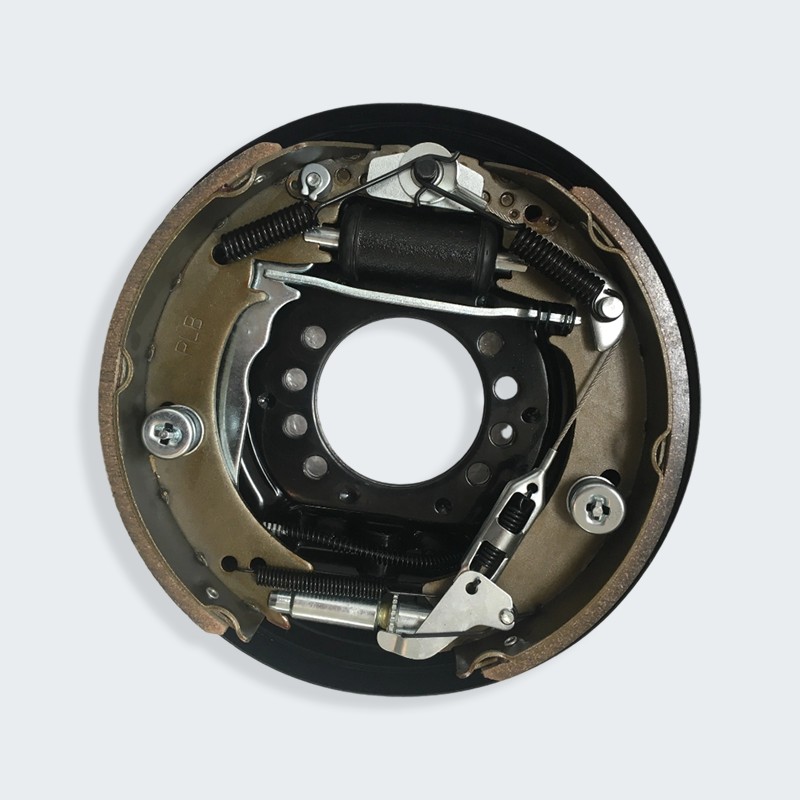 Hangcha A30 3-Ton Left Brake AssemblyLeft-side brake assembly for Hangcha A30 3-ton forklifts, designed for planned replacement and more predictable braking in frequent transfer and stacking work.View Product →
Installation and the Checks That Keep It Running
Fitting is usually a two-hour job: mount the frame, connect the auxiliary hoses, set the relief valve to the attachment maker's figure, then cycle it through full stroke with the mast tilted back and forward to check hose routing. What decides whether it lasts is what happens afterwards.
Daily and weekly checks
- Gripper jaw teeth and lip depth — a worn jaw drops sheets mid-pull.
- Load plate wear strips, which set how easily a loaded sheet slides on and off.
- Hose condition at the carriage, where flexing is concentrated.
- Relief pressure, particularly after any hydraulic work on the truck.
- Slip sheet stock consistency, since a change of supplier changes clamping depth.
Because the truck is braking harder and more often, shorten the brake inspection interval and treat shoes and cylinders as scheduled consumables rather than breakdown items. Matching parts by tonnage and side keeps the job predictable:
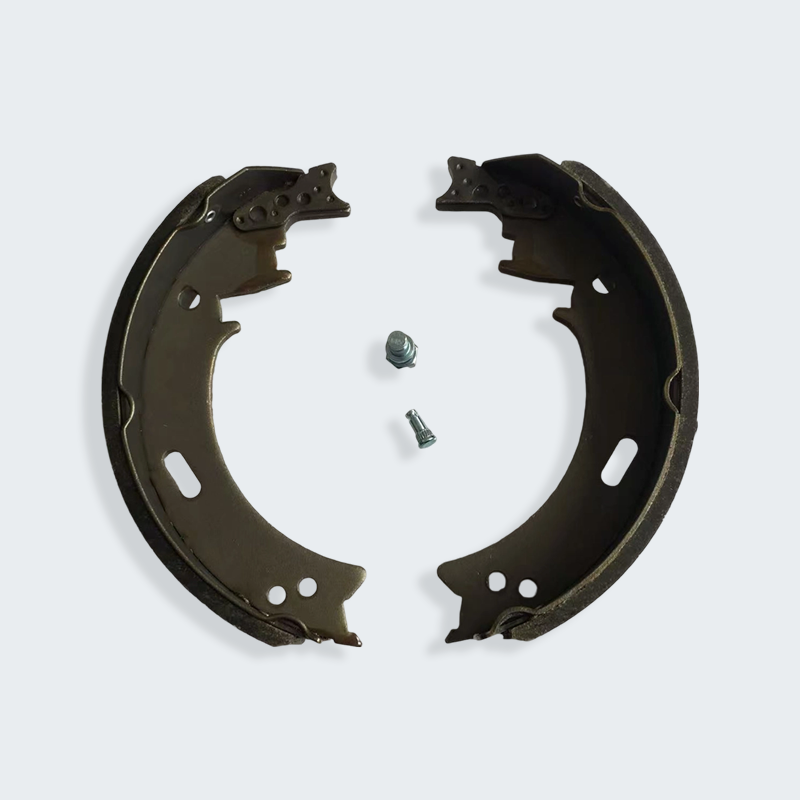 3-Ton Forklift Brake Shoe for Hangcha, Heli, LiuGong and LonkingBrake shoe for common 3-ton Hangcha, Heli, LiuGong and Lonking forklifts, offering a friction replacement to restore braking response and support scheduled brake maintenance.View Product →
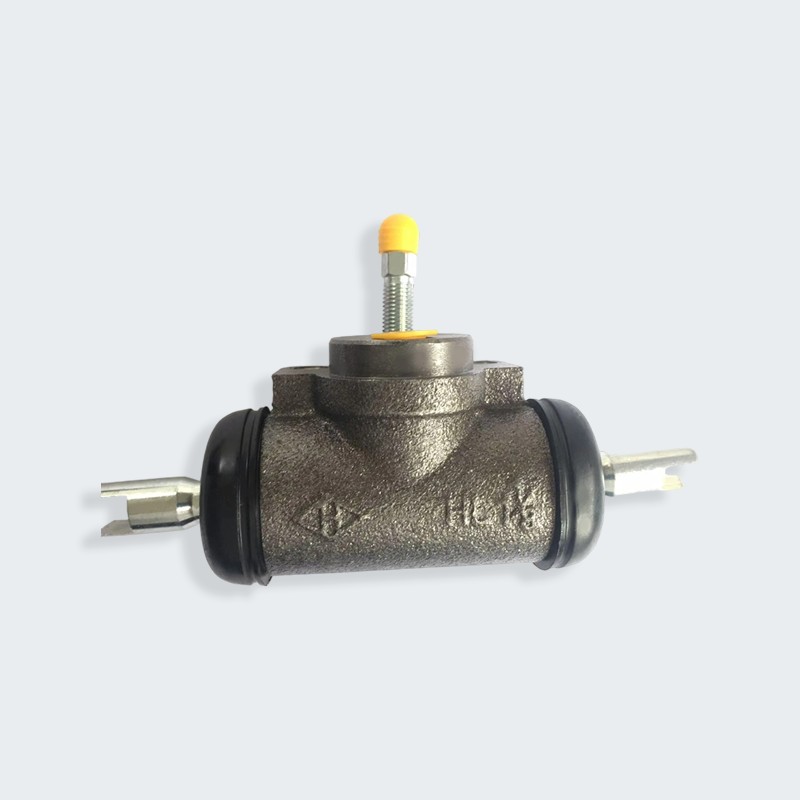 Hangcha R30 and Heli 3-Ton Forklift Brake CylinderBrake wheel cylinder for Hangcha R30 and Heli 3-ton forklifts, intended to restore hydraulic braking response and reduce soft-pedal or delayed braking issues.View Product →
If you do only one thing before buying, take the truck's capacity chart, the attachment's mass and its load-centre figure, and work out the real residual capacity — then compare that number with the heaviest load you actually move. Only after that is settled does it make sense to talk about cycle times and sheet savings.
Then price the wear items into the first year. A slip-sheet operation is a brake-heavy operation by design, and the trucks that stay productive are the ones where linings, shoes, cylinders and wheel ends were planned for rather than discovered.
