
 English
 عربى
عربى
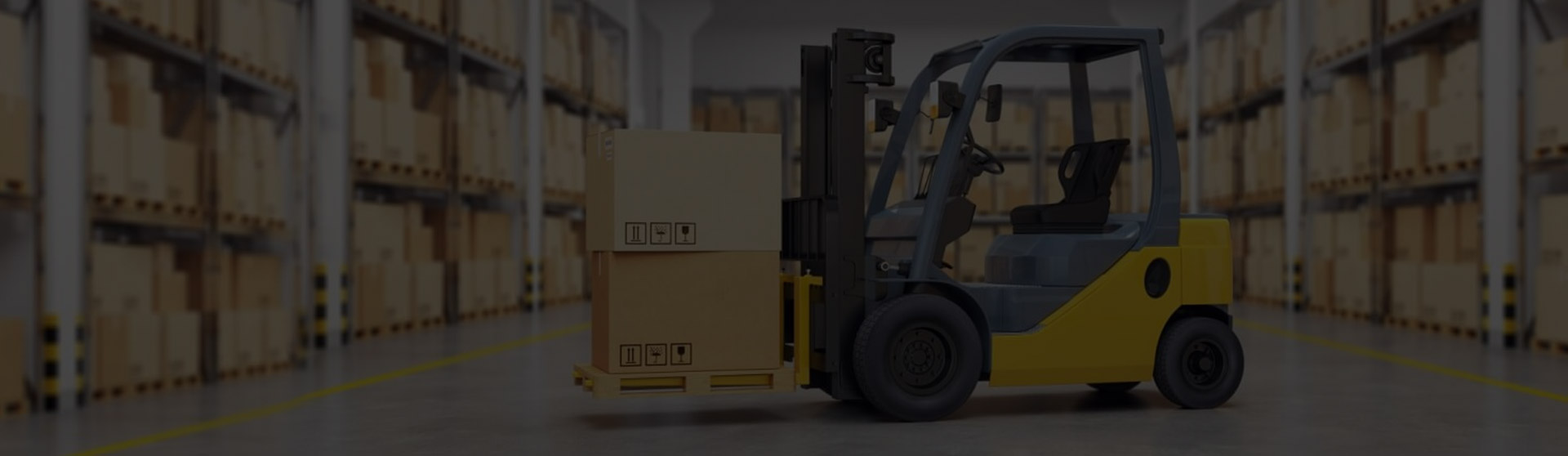

Imagine an inspector asking for training records while an operator stands beside a forklift. That request alone is enough to expose gaps in certification, evaluation, and documentation. The conclusion before the details: forklift training requirements are about demonstrated competence, not seat time. Under OSHA's Powered Industrial Truck standard, 29 CFR 1910.178(l), every operator must be trained, evaluated, and certified before being assigned to a truck. Waiting for an incident to trigger training is the most expensive way to learn the rule.
Content
- 1 The Core OSHA Forklift Training Requirements
- 2 Operator Qualifications and Certification Realities
- 3 Refresher Training: When Three Years Is Too Long
- 4 Building a Training Program That Holds Up in an Inspection
- 5 Penalties, Inspections, and the Cost of Skipping Compliance
- 6 Vehicle Condition and Brake Inspections: A Training Topic That Deserves More Attention
The Core OSHA Forklift Training Requirements
OSHA does not dictate a fixed number of classroom hours. The standard is performance-based: no employee may operate a powered industrial truck until formal instruction, practical training, and a documented evaluation have been completed successfully. The phrase that matters is "successful completion." A signature on a form does not prove safe operation if the operator cannot demonstrate it.
| Requirement | What it means in practice |
|---|---|
| Initial training | Training must be completed before assignment to any forklift operation. |
| Formal instruction | Classroom, online, or video content covering operating instructions, load handling, stability, and workplace hazards. |
| Practical training | Hands-on practice on the type of truck the operator will use, under a qualified trainer. |
| Performance evaluation | A documented observation showing the operator can handle routine and challenging situations safely. |
| Certification record | Written proof with the operator's name, trainer information, evaluation date, and truck type covered. |
| Refresher training | At least once every three years, or sooner when specific triggers occur. |
A common mistake is treating the certificate expiration date as the only deadline. Three years is the maximum interval between evaluations, not a guarantee that the operator is still safe. The standard also requires retraining when an operator is seen taking risks, is involved in an accident, or is assigned to a different type of truck.
Operator Qualifications and Certification Realities
Most training programs and state rules expect forklift operators to be at least 18 years old. They may also require a valid driver's license, adequate vision, and the physical ability to handle the controls. It is important to remember that OSHA does not issue forklift licenses and does not rely on a driver's license as proof of skill. A person with a perfect driving record still needs full forklift training before touching industrial equipment.
Certification is issued by the employer, not the government
After the operator completes formal instruction and passes a practical evaluation, the employer issues the certification document. That document should state the operator's name, the trainer's name, the date, and the forklift class covered. During an OSHA inspection, this record is the primary evidence that training actually took place.
Required topics are broader than steering and stopping
The standard does not limit training to basic driving skills. A compliant program must cover the conditions an operator will face in the facility. Typical topics include:
- Operating instructions, warnings, and precautions for the specific truck type
- Truck controls, instrumentation, steering, traction, and braking
- Vehicle capacity, load stability, and how attachments change the center of gravity
- Pre-shift inspection and maintenance tasks assigned to the operator
- Refueling, recharging, and battery maintenance for the applicable power source
- Surface conditions, ramps, pedestrian flow, and hazardous locations
- Shifting, stacking, loading, and dock procedures
Refresher Training: When Three Years Is Too Long
The three-year interval is often quoted as the whole training rule, but it is only the baseline. Refresher training is required sooner when an operator is involved in an accident, is observed operating unsafely, fails an evaluation, or moves to a different truck type. These triggers exist because habits change and workplaces change with them.
- Observed unsafe operation, such as speeding, abrupt turns, or unstable loads
- An accident or near-miss involving the operator, a pedestrian, or equipment
- An evaluation that shows gaps in skill, judgment, or rule knowledge
- Assignment to a different class of powered industrial truck
- A significant change in workplace conditions, such as new racking heights, narrow aisles, or a different dock layout
Document every refresher event, even when it is short. A 30-minute review and a practical observation can satisfy a trigger, but only if the record shows what was reviewed, who conducted it, and what the operator demonstrated.
Building a Training Program That Holds Up in an Inspection
An effective program uses the same structure whether you are training one operator or fifty. The format matters less than the evidence: every operator needs a documented path to certification. If you are designing a program from scratch, working through these steps in order will close most compliance gaps.
- Assess the operator's existing experience, language comprehension, and physical readiness.
- Deliver formal instruction covering OSHA topics and facility-specific rules.
- Demonstrate each control and safety system on the actual truck type.
- Supervise hands-on practice in the working environment where the truck will be used.
- Evaluate performance with a checklist that includes braking, load handling, and pedestrian awareness.
- Issue a certification document and retain a training record in a central file.
- Schedule refresher dates and monitor for triggers that require earlier retraining.
Keep records where an auditor can see them in minutes. A training matrix that lists each operator, the truck class, and the evaluation date is more persuasive than a stack of incomplete forms.
Penalties, Inspections, and the Cost of Skipping Compliance
The cost of noncompliance is rarely limited to the fine itself. A single OSHA citation for an untrained forklift operator can exceed the cost of building a complete training program. If a violation is classified as repeat or willful, the amount climbs further. Beyond direct penalties, an untrained operator creates risk that appears as damaged racks, damaged products, and injured coworkers.
- Civil penalties for serious violations
- Higher penalty amounts for repeat or willful violations
- Workers' compensation claims and higher insurance premiums
- Production downtime while the site investigates an incident
- Forklift, racking, inventory, and building damage that could have been avoided
During an inspection, OSHA may compare training records with shift logs. If a truck was in operation and no certified operator was on duty, the paperwork gap can become the basis of a violation.
Vehicle Condition and Brake Inspections: A Training Topic That Deserves More Attention
Forklift training requirements explicitly include the inspection and maintenance tasks an operator is expected to perform, and brakes belong near the top of that list. A forklift that cannot stop safely turns a small operator mistake into a serious incident. During practical training, have the operator check pedal response, listen for unusual noises, and report any change in stopping behavior.
For a 3-ton internal combustion forklift, the brake assembly is often the first place wear becomes obvious. Uneven lining thickness, scored drums, or weak return springs cause the truck to pull to one side under braking. Replacing a worn assembly before it affects stopping performance is far cheaper than repairing the damage caused by a failed stop.
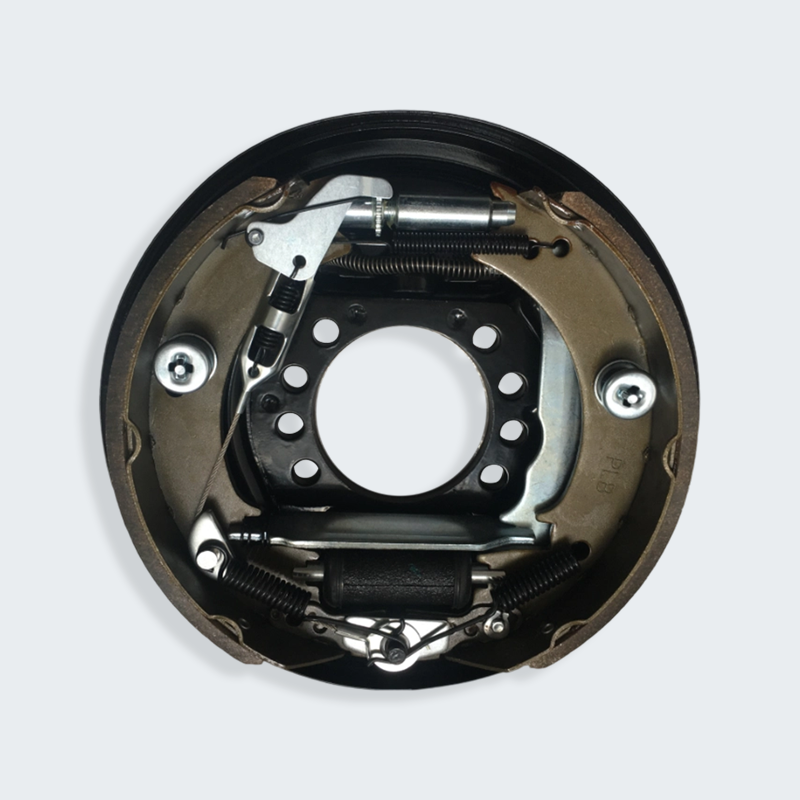 Heli 3-Ton Left Brake Assembly for ForkliftsThis left brake assembly is a common wear point on 3-ton forklifts. Replacing it before scoring or weak springs cause uneven braking helps maintain safe stopping performance and avoids costlier repairs.View Product →
Brake cylinders are another point that trainers should emphasize. A small fluid leak, a collapsed dust boot, or a seized piston can make the pedal feel soft or spongy. Instruct operators to report any drop in brake pedal height immediately, and let maintenance verify the cylinder bore and seals before the truck returns to service.
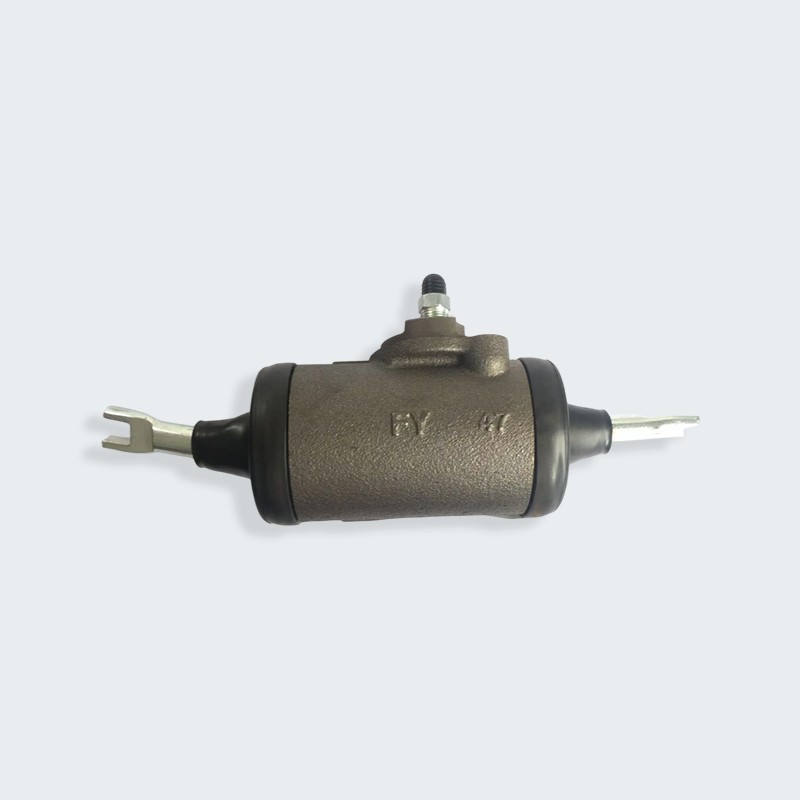 CPCD100A Double-Pump Brake Cylinder for 8-10 Ton ForkliftsDesigned for medium to large Hangcha and Heli forklifts, this upper-left brake cylinder uses dual pumps for balanced braking force. Its accessible location simplifies inspection and maintenance, crucial for catching fluid leaks or piston issues early.View Product →
Brake shoes are the wear item most directly tied to stopping distance. When lining thickness approaches the service limit, replace the shoes in axle sets and inspect the drum and hardware at the same time. Connecting training to this level of detail shows an auditor that compliance is not just paperwork; it is the normal way the fleet is operated.
Having the right brake system components on hand means a wheel does not stay out of service for days. If you are unsure which part matches your truck model and tonnage, contact our team before scheduling the next training session. A quick parts check can remove one mechanical risk from the evaluation environment.
Compliance becomes routine when training is treated as a system: train, evaluate, document, refresh, and repeat. The requirement itself is not negotiable, but the way you meet it can be practical, efficient, and visible in daily operations. Start with the next shift, verify the records, and make the inspection process part of the lesson.
