
 English
 عربى
عربى
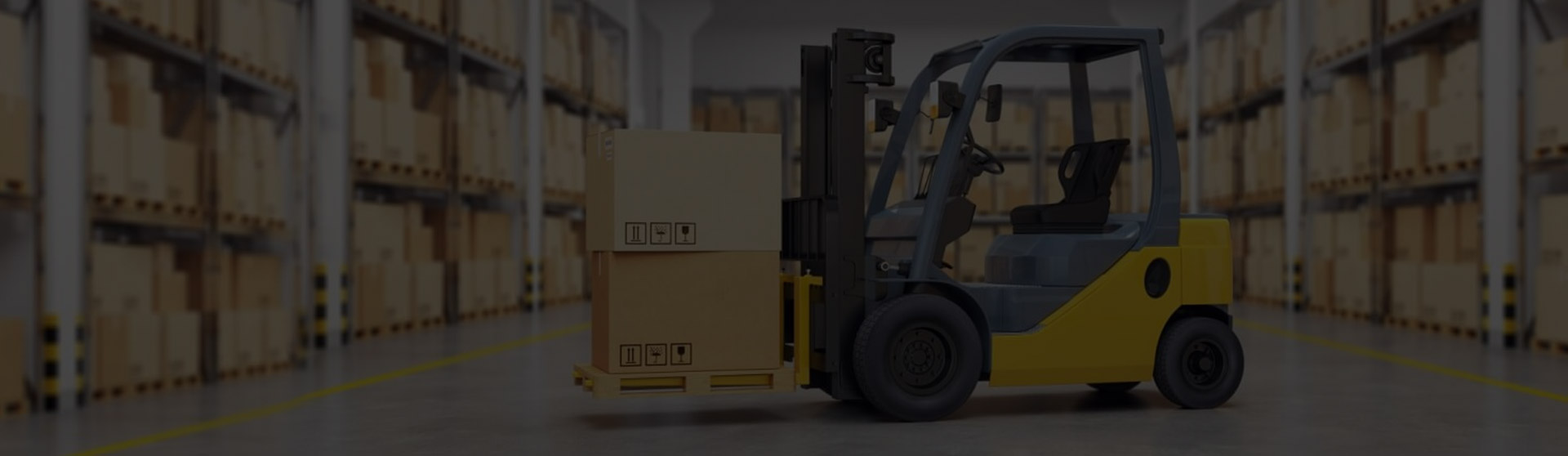

Forklifts help businesses complete tasks such as material handling, stacking, and transportation. However, if the forklift's brake system malfunctions, it can not only affect the forklift's work efficiency but also pose safety hazards. Therefore, understanding solutions to common problems and quick repair measures for forklift brake systems is crucial for ensuring the normal operation of the forklift and the safety of the work environment.
1. Common Forklift Brake System Malfunctions
During use, the forklift brake system may experience various problems. The following are some common types of malfunctions:
(1) Brake failure or insufficient braking
Brake failure usually manifests as a soft or unresponsive brake pedal, or ineffective braking. Possible causes include:
Brake fluid leakage or low fluid level
Severe brake pad wear
Brake line rupture or blockage
Hydraulic system malfunction
(2) Soft or excessively long brake pedal travel
A soft or excessively long brake pedal travel usually means insufficient brake fluid or a problem with the hydraulic system. Other causes include brake pad wear, air entering the hydraulic system, etc.
(3) Abnormal noise from the braking system
When the forklift brake system produces abnormal noise, it may be due to excessive wear of the brake pads or discs, or a loose or damaged component in the braking system.
(4) Brake fluid leakage
Brake fluid leakage can lead to insufficient pressure in the braking system, ultimately affecting braking performance. Common leakage points include brake lines, brake fluid reservoirs, and brake pump connections.
2. Quick Repair Methods for Forklift Brake System Malfunctions
For different brake system malfunctions, the following are some common quick repair methods:
(1) Adding brake fluid
If the brake fluid level is too low or there is a leak, adding brake fluid can temporarily solve the problem of insufficient braking.
Quick repair steps:
Stop the forklift and turn off the engine, ensuring the forklift is in a safe state.
Open the brake fluid reservoir cap and check the fluid level. Select the correct type of brake fluid according to the forklift's user manual. If the brake fluid level is too low, add an appropriate amount of brake fluid to the brake fluid reservoir.
Start the forklift, check the braking effect, and ensure the fluid level is stable.
Note: If low brake fluid levels occur frequently, there may be a leak. It is recommended to check the brake lines and connections.
(2) Checking and replacing brake pads
If the brake pads are severely worn, it may lead to poor braking performance. In this case, the wear of the brake pads needs to be checked and replaced.
Quick repair steps:
Use a jack to lift the forklift so that the wheels are suspended.
Remove the wheels and check the thickness of the brake pads. If the thickness of the brake pads is below the safety standard, replace them immediately.
Replace with new brake pads, ensuring they are securely installed.
Check the surface of the brake disc for cracks or deep grooves. If damaged, the brake disc also needs to be replaced.
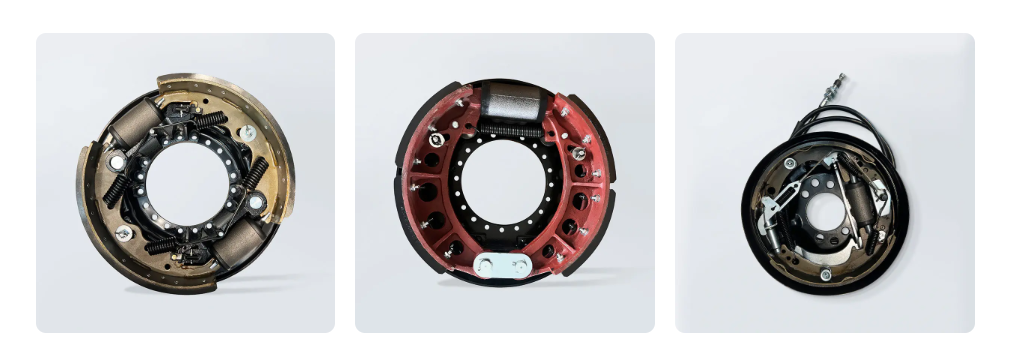
(3) Checking and repairing brake line leaks
Brake line leaks can cause brake fluid loss, affecting braking performance. If a brake line leak is found, it should be repaired as soon as possible.
Quick repair steps:
Park and turn off the forklift engine.
Observe the brake lines and check for leaks, especially at the brake line connections and around the brake pump, where leaks are prone to occur.
If a leak is found, a special sealing tape or leak-stopping adhesive can be used for temporary repair until the damaged part is replaced.
When replacing a damaged line, first disconnect the forklift power and release the system pressure, then remove the damaged line and install a new one.
Note: If the leak point cannot be determined, it is recommended to seek professional repair services.
(4) Checking for abnormal noises in the braking system
Abnormal noises in the braking system may be caused by worn brake pads, brake discs, or other loose components. If abnormal noises are heard, they should be checked and repaired promptly.
Quick repair steps:
Park and turn off the forklift engine to ensure safety.
Check if the brake pads are excessively worn or have fallen off. If a problem is found, replace the brake pads immediately.
Check the surface of the brake disc for cracks, deep grooves, or unevenness. If any are found, it is recommended to replace the brake disc. Inspect other components of the braking system, such as brake calipers and bolts, to ensure they are securely installed.
While the above methods can provide quick fixes for forklift braking system problems, the best approach is to perform regular inspections and maintenance to extend the lifespan of the forklift braking system and reduce the probability of malfunctions. Here are some preventative measures:
Regularly check the brake fluid level and quality, and replace it as needed.
Regularly check the wear of the brake pads and discs to avoid excessive wear.
Inspect the brake lines and hydraulic system to ensure there are no leaks or damage.
Perform regular maintenance and servicing of the braking system, such as replacing brake fluid and checking the ABS system.
Train forklift operators to ensure they master correct driving techniques and avoid braking problems caused by improper operation.
Through regular maintenance and timely repairs, you can effectively ensure the safety of the forklift braking system, reduce malfunctions, and ensure smooth operation in the workplace.
