
 English
 عربى
عربى
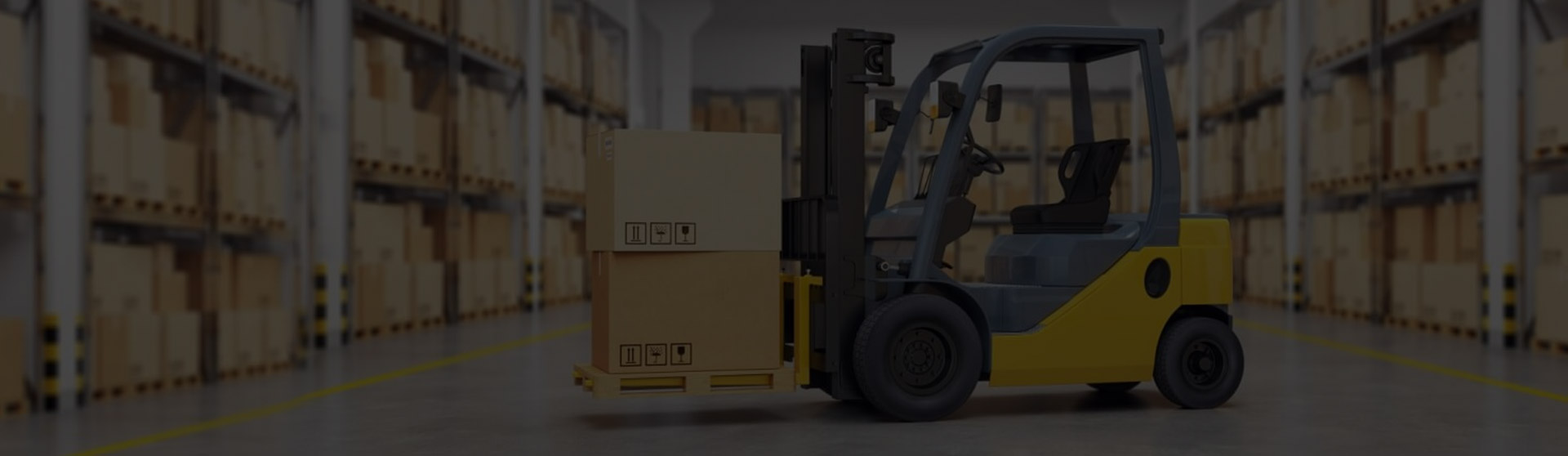

For industrial and warehouse operations in 2026, the best forklift steel rims are those engineered to handle continuous load cycling, resist deformation under rated capacity, and maintain a secure tire bead seat across both pneumatic and solid tire configurations. Based on real-world application data, facilities that standardize on correctly spec'd heavy duty forklift rims see wheel-related downtime drop by 30%–45% compared to those running undersized or mismatched components. This guide cuts through the options to help procurement and maintenance teams make the right call the first time.
Content
- 1 Why the Forklift Steel Rim Is More Critical Than Most Teams Realize
- 2 Rim Type Selector: Matching the Right Design to Your Operation
- 3 Key Specifications to Verify Before Ordering
- 4 Load Capacity by Rim Diameter: Industry Reference Data
- 5 Heavy Duty Forklift Rim Performance: What Changes at Higher Capacities
- 6 Warehouse Forklift Steel Wheel Selection by Application Type
- 7 Inspection Intervals and Rim Service Life: What the Data Shows
- 8 Rim Replacement Rate Trend: Structured vs. Unstructured Maintenance
- 9 Safe Handling of Forklift Split Rim Assemblies
- 10 About Hangzhou Shuaijia (Yifa) Forklift Parts Co., Ltd and Zhuji Prebo Brake System Technology Co., Ltd
- 11 Frequently Asked Questions
Why the Forklift Steel Rim Is More Critical Than Most Teams Realize
The rim is the structural interface between the forklift's axle load and the tire. Every load cycle—pick, travel, deposit—transmits compressive, shear, and torsional stress through the rim. A forklift steel rim that is undersized, corroded, or improperly matched to tire type will fail progressively: first through bead slippage, then through rim deformation, and ultimately through tire blowout or sudden structural failure.
In a typical 3-ton counterbalance forklift operating two shifts per day, each drive wheel rim absorbs an estimated 1,200–1,800 load cycles daily. Over a 250-day working year, that totals over 400,000 stress cycles per rim. Steel construction—typically Q235 or Q345 structural steel—is the only material that reliably sustains this fatigue profile without creep or brittleness at ambient temperatures ranging from -20°C to +60°C.
Rim Type Selector: Matching the Right Design to Your Operation
Not all forklift rims are interchangeable. The three primary configurations each serve a specific tire type and operational context:
Solid Tire Forklift Rim
A solid tire forklift rim features a narrow, high-strength bead seat designed to accept press-on solid rubber tires. These rims are the dominant choice for indoor warehouse forklifts—reach trucks, order pickers, and counterbalance units operating on smooth concrete. Because solid tires eliminate the risk of puncture, they are the preferred option for facilities handling sharp metal scrap, glass, or other puncture-prone materials. Rim width tolerance is critical: a mismatch of even 2–3 mm in bead seat diameter leads to tire walk-off under lateral load.
Forklift Split Rim Assembly
A forklift split rim assembly consists of a base rim and a removable lock ring, allowing pneumatic tires to be mounted and demounted without specialized press equipment. This configuration is standard on 3–10 ton internal combustion forklifts used in outdoor yards, lumber operations, and port facilities. The split ring must be inspected at every tire change: a cracked or deformed lock ring can eject under inflation pressure with significant force. Replacement of the lock ring at every second tire change is widely recommended in industry maintenance guides.
Industrial Forklift Wheel Rim (Multi-Piece)
Larger capacity forklifts—typically 5 tons and above—use multi-piece industrial forklift wheel rims that allow the side ring and gutter ring to be replaced independently of the base rim. This modular approach significantly reduces long-term maintenance cost in heavy port and steel mill environments, where rim outer flanges wear faster than the base structure.
Key Specifications to Verify Before Ordering
| Specification | Typical Range | Why It Matters |
|---|---|---|
| Rim Diameter | 10" – 20" | Must match tire inner diameter exactly |
| Rim Width | 5" – 12" | Determines tire bead seating stability |
| Load Rating | 1,500 – 12,000 kg | Must exceed max axle load with safety margin |
| Bolt Circle / PCD | Varies by OEM | Hub bolt pattern must match exactly |
| Center Bore | Varies by axle | Incorrect bore causes hub-centric runout |
| Steel Grade | Q235 / Q345 | Determines fatigue life and deformation resistance |
| Surface Treatment | Painted / Powder-coated / Galvanized | Determines corrosion resistance in wet environments |
Load Capacity by Rim Diameter: Industry Reference Data
Figure 1: Typical per-rim load ratings by diameter for heavy duty forklift steel rims (representative industry reference values)
Heavy Duty Forklift Rim Performance: What Changes at Higher Capacities
As forklift capacity increases from 1.5 tons to 10 tons, the engineering demands on the heavy duty forklift rim change in specific, measurable ways:
- Wall thickness: Standard 1.5–3T rim flange thickness is typically 8–10 mm. At 5–10T capacity, flanges increase to 14–18 mm to resist lateral bending under cornering loads.
- Weld quality: Higher-capacity rims require full-penetration welds on all load-bearing joints, verified by non-destructive testing (NDT). Partial-penetration welds acceptable in lighter rims are insufficient above 5T.
- Bolt quantity and grade: Drive wheel bolt count increases from 6 to 8 or 10 bolts, typically at Grade 10.9 or higher, to prevent bolt-circle fatigue cracking under dynamic loading.
- Surface treatment depth: Electrophoretic coating or hot-dip galvanization (rather than standard spray painting) is standard for heavy-capacity rims operating in outdoor or chemical-exposure environments, providing 1,000+ hours of salt spray resistance.
Warehouse Forklift Steel Wheel Selection by Application Type
The right warehouse forklift steel wheel depends heavily on the specific operational environment. The following application-based guide covers the most common warehouse and industrial scenarios:
| Environment | Recommended Rim Type | Tire Type | Surface Treatment |
|---|---|---|---|
| Indoor warehouse (smooth concrete) | Solid tire rim | Press-on solid | Painted |
| Outdoor yard / port | Split rim assembly | Pneumatic | Powder-coated or galvanized |
| Cold storage / freezer | Solid tire rim | Non-marking solid | Epoxy-coated |
| Steel mill / heavy industry | Multi-piece industrial rim | Pneumatic / solid | Hot-dip galvanized |
| Food processing / pharma | Solid tire rim (smooth flange) | Non-marking solid | Stainless or epoxy |
Inspection Intervals and Rim Service Life: What the Data Shows
An industrial forklift wheel rim does not have a fixed service life in calendar years—it has a fatigue life measured in load cycles and influenced by operating conditions. Practical maintenance benchmarks from fleet operations:
- Visual inspection: Every tire change. Check flange straightness, weld integrity, bead seat corrosion, and bolt hole elongation.
- Dimensional check: Every 2,000 operating hours. Flange runout should not exceed 1.5 mm TIR; bead seat diameter tolerance should remain within ±0.5 mm of nominal.
- Split ring replacement: At every second tire change or when any crack, nick, or deformation is visible—whichever comes first.
- Full rim replacement: Typically at 8,000–12,000 operating hours for standard duty indoor applications; 5,000–7,000 hours for outdoor or heavy-cycle applications.
Fleets that implement structured rim inspection intervals report 62% fewer unplanned tire-related stoppages compared to condition-only replacement programs.
Rim Replacement Rate Trend: Structured vs. Unstructured Maintenance
Figure 2: Unplanned rim-related stoppages per 1,000 operating hours — structured inspection vs. condition-only replacement over 5 years
Safe Handling of Forklift Split Rim Assemblies
The forklift split rim assembly is the component most frequently involved in wheel-related workplace incidents. Safe handling requires strict procedure adherence:
- Fully deflate the tire before any disassembly. Never attempt to break the bead on an inflated split-rim assembly.
- Inspect the lock ring for cracks, distortion, or corrosion pitting before reinstallation. A ring with any visible defect must be replaced immediately.
- Inflate inside a safety cage rated for the tire size. Stand to the side, never in front of the wheel, during initial inflation to 10 psi while confirming ring seating.
- Complete inflation in stages: bring to 10 psi, inspect ring position, bring to working pressure. Never exceed the rim manufacturer's maximum inflation rating.
- Document the inspection date, ring condition, and inflating technician on the vehicle's maintenance record for traceability.
About Hangzhou Shuaijia (Yifa) Forklift Parts Co., Ltd and Zhuji Prebo Brake System Technology Co., Ltd
Founded in 1998 and located in Hangzhou, Zhejiang Province, Hangzhou Shuaijia (Yifa) Forklift Parts Co., Ltd. is a professional enterprise engaged in the wholesale of forklift parts. The company currently owns more than 10,000 square meters of factory buildings with an inventory of over 20 million pieces of parts, specializing in the wholesale of 1–10T internal combustion forklift parts and battery car accessories.
Zhuji Prebo Brake System Technology Co., Ltd., established in 2009, is a professional China OEM forklift steel rim factory and ODM forklift steel rim supplier. The company has independently developed and produced various brakes, brake shoes, flexible shafts, hoses, high pressure hoses, copper pipes, piston rods, springs, screws, wire harness, and other products—covering over 10,000 varieties of accessories. The company has incorporated production, supply, and marketing into one integrated operation, and has established a forklift parts branch in Shenyang for direct sales of high-quality forklift parts.
After more than 20 years of continuous development, the company has earned the support and trust of many customers through high-quality products and comprehensive pre-sales and after-sales service. With an internationalized operational perspective and a customer-oriented service philosophy, the company remains dedicated to providing domestic and foreign users with quality products and responsive service.
Frequently Asked Questions
Q1: Can I use a forklift steel rim designed for pneumatic tires with a solid tire?
No. Pneumatic and solid tire rims have fundamentally different bead seat profiles and diameters. A solid tire forklift rim has a narrower, higher-interference bead seat designed for press-on mounting. Using the wrong rim type results in either tire walk-off under load or inability to mount the tire at all. Always verify the rim designation matches the tire specification sheet.
Q2: How do I know when a heavy duty forklift rim needs replacement rather than repair?
Replace rather than repair when: flange runout exceeds 2 mm TIR, any weld crack is detected, bolt holes show elongation or wallowing, bead seat corrosion has reduced wall thickness by more than 15% of nominal, or the rim has suffered impact damage visible as a flat spot or buckle. Welded repairs to load-bearing sections of a heavy duty forklift rim are not recommended without OEM authorization.
Q3: What is the correct torque specification for forklift wheel bolts on an industrial forklift wheel rim?
Torque specifications vary by bolt size and grade. As a general reference: M16 Grade 10.9 bolts are typically torqued to 195–220 Nm, and M20 Grade 10.9 bolts to 380–420 Nm. Always refer to the forklift OEM's service manual for the specific model. Bolts should be retorqued after the first 8 hours of operation following any wheel removal and reinstallation.
Q4: Are warehouse forklift steel wheels interchangeable between different forklift brands?
Sometimes, but not assumed. Bolt circle diameter (PCD), number of bolts, center bore, and offset must all match. Some aftermarket warehouse forklift steel wheels are manufactured to cross-reference multiple OEM applications, but confirmation against the vehicle's hub specification is always required before installation. Running a rim with incorrect offset shifts the wheel's load path and can damage hub bearings within a short period.
Q5: What surface treatment provides the best corrosion resistance for outdoor forklift steel rims?
Hot-dip galvanization provides the longest service life in outdoor or chemically aggressive environments, typically achieving 1,500–2,000 hours of salt spray resistance per ISO 9227. Powder coating is a cost-effective alternative for moderate-exposure applications, offering 800–1,000 hours of salt spray performance. Standard air-spray paint is suitable for clean indoor environments only and should not be specified for yard or port-handling equipment.
